

Behind the Scenes: The First Stages of a High Desert Landscape Installation
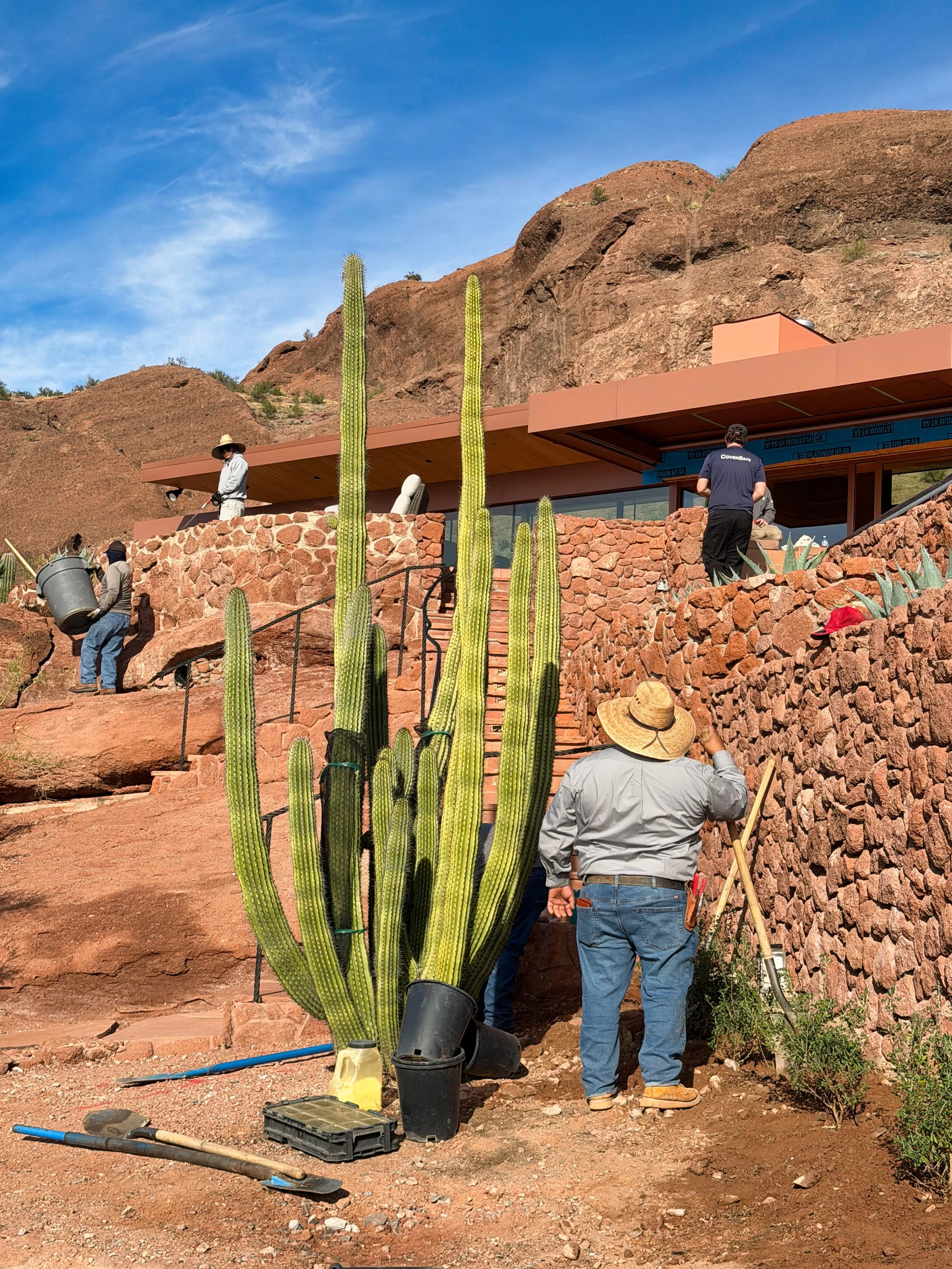
When people see a finished high desert landscape, they often notice the clean lines, sculptural cactus, and seamless connection between architecture and nature. What they don’t always see is the intense planning, coordination, and precision that happens long before the first plant is settled into the ground—especially on a hilltop property like this one.
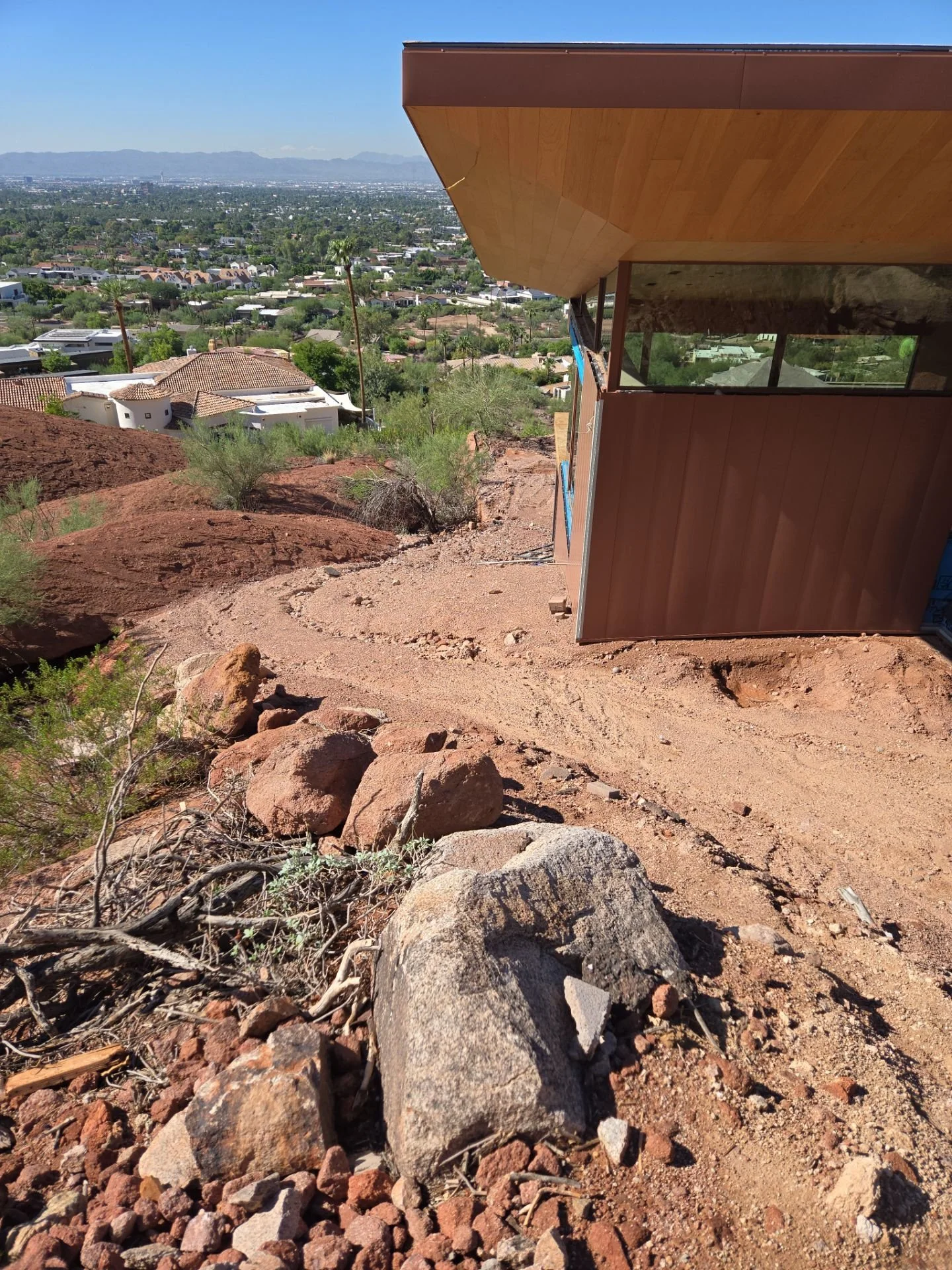
This project offers a perfect look behind the scenes at the early phases of a high desert landscape installation, where access is limited, terrain is steep, and every move matters.
A Hilltop Site Requires a Different Approach
Unlike flat residential lots, this home is perched high above the desert floor, surrounded by rocky slopes and dramatic elevation changes. There’s no easy driveway access for heavy equipment or oversized plant material. That means:
Traditional delivery methods aren’t possible
Soil disturbance must be carefully controlled
Existing rock formations and architecture must be protected
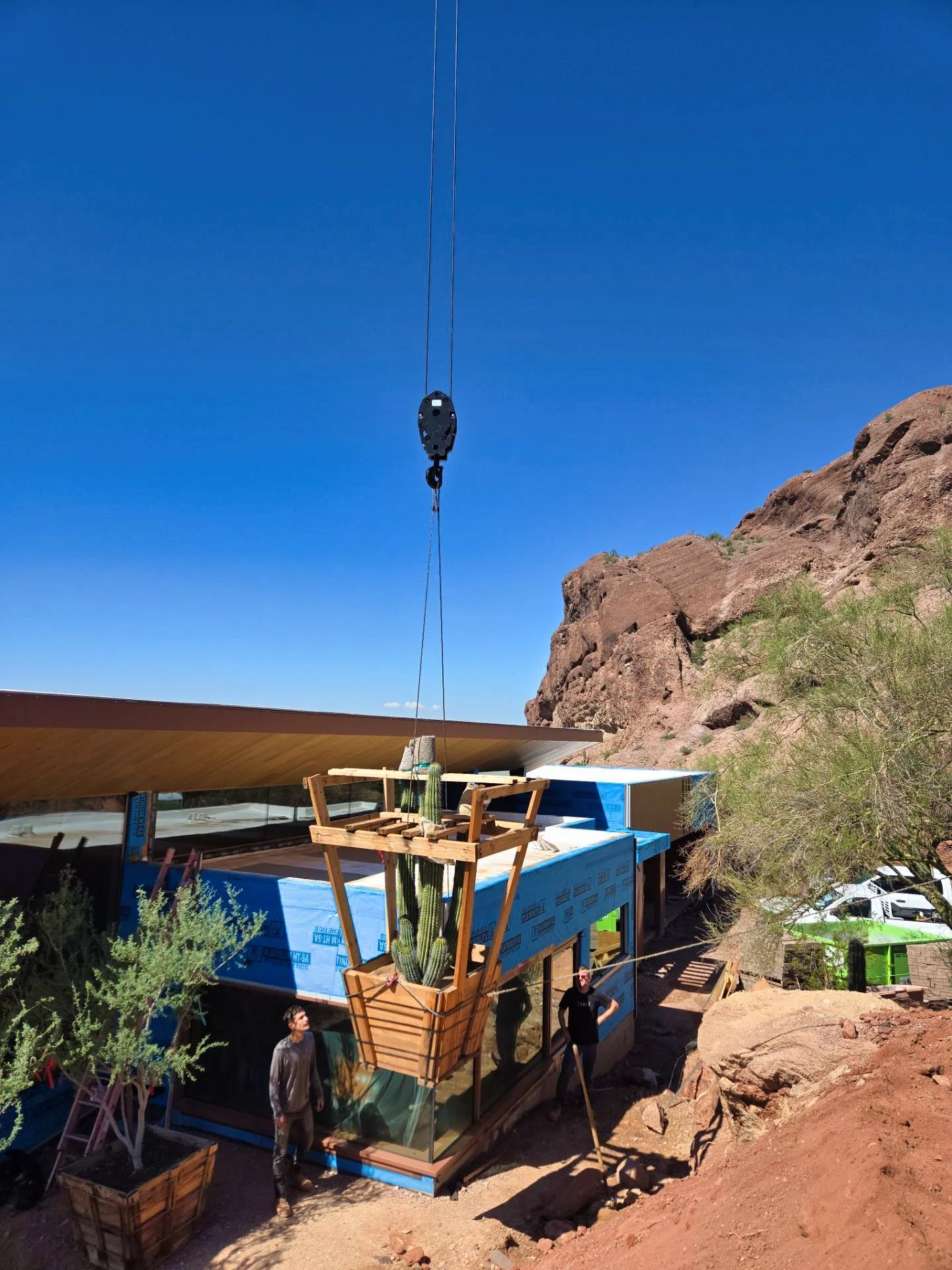
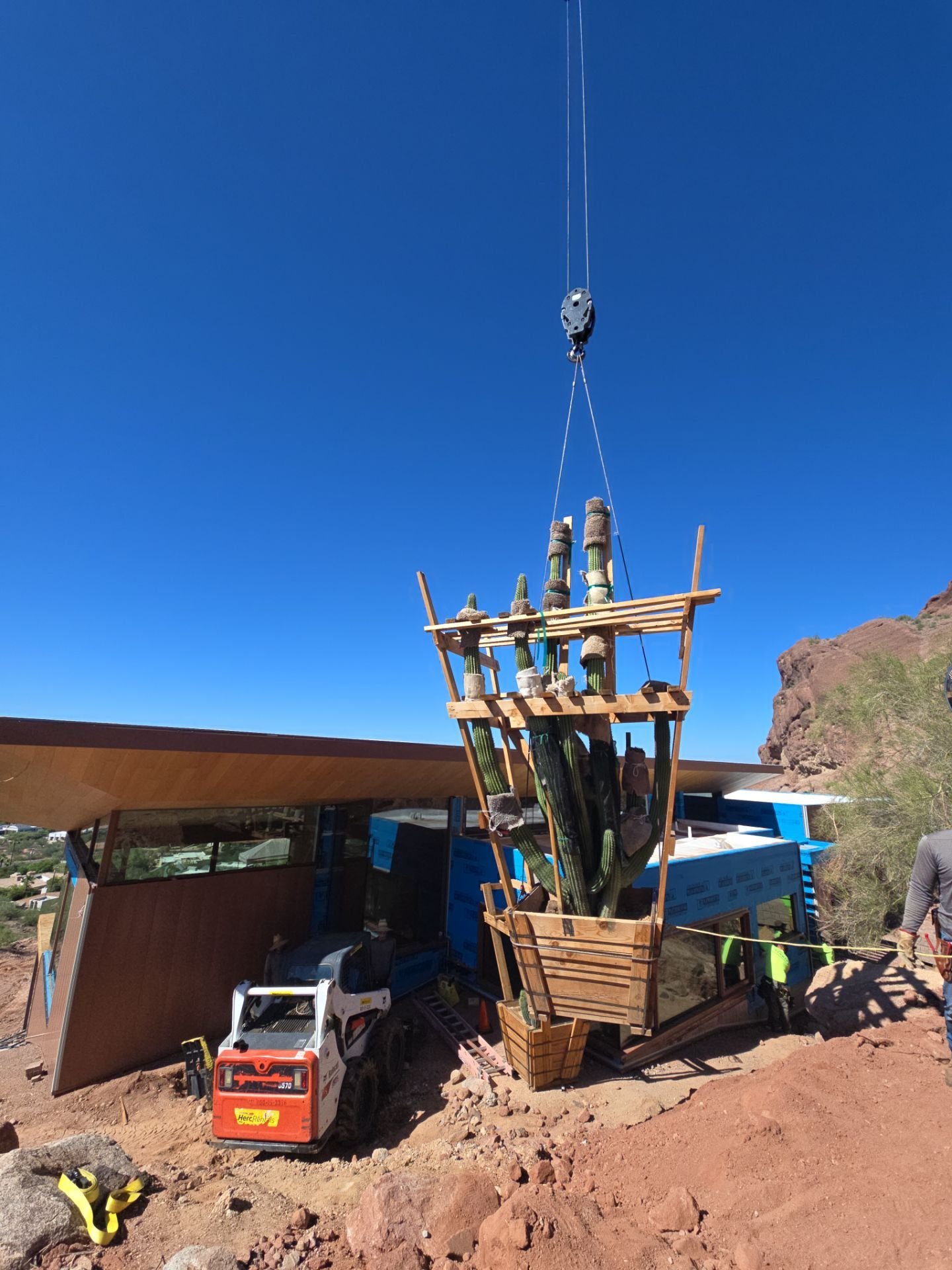
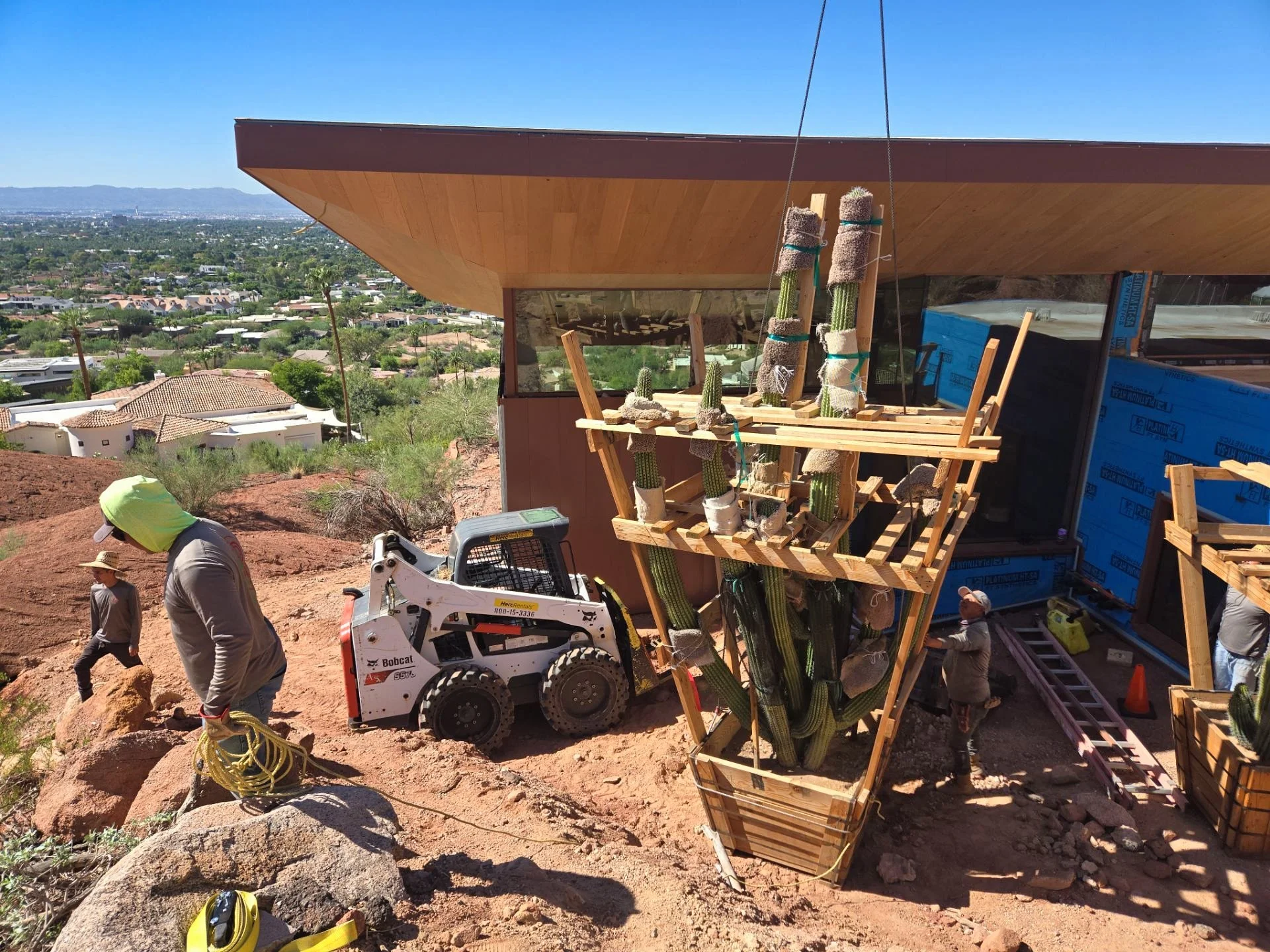
To solve these challenges, the installation team used a crane-assisted landscape install, allowing materials to be safely lifted directly into place.

Crane Lifts: More Than Just Plants
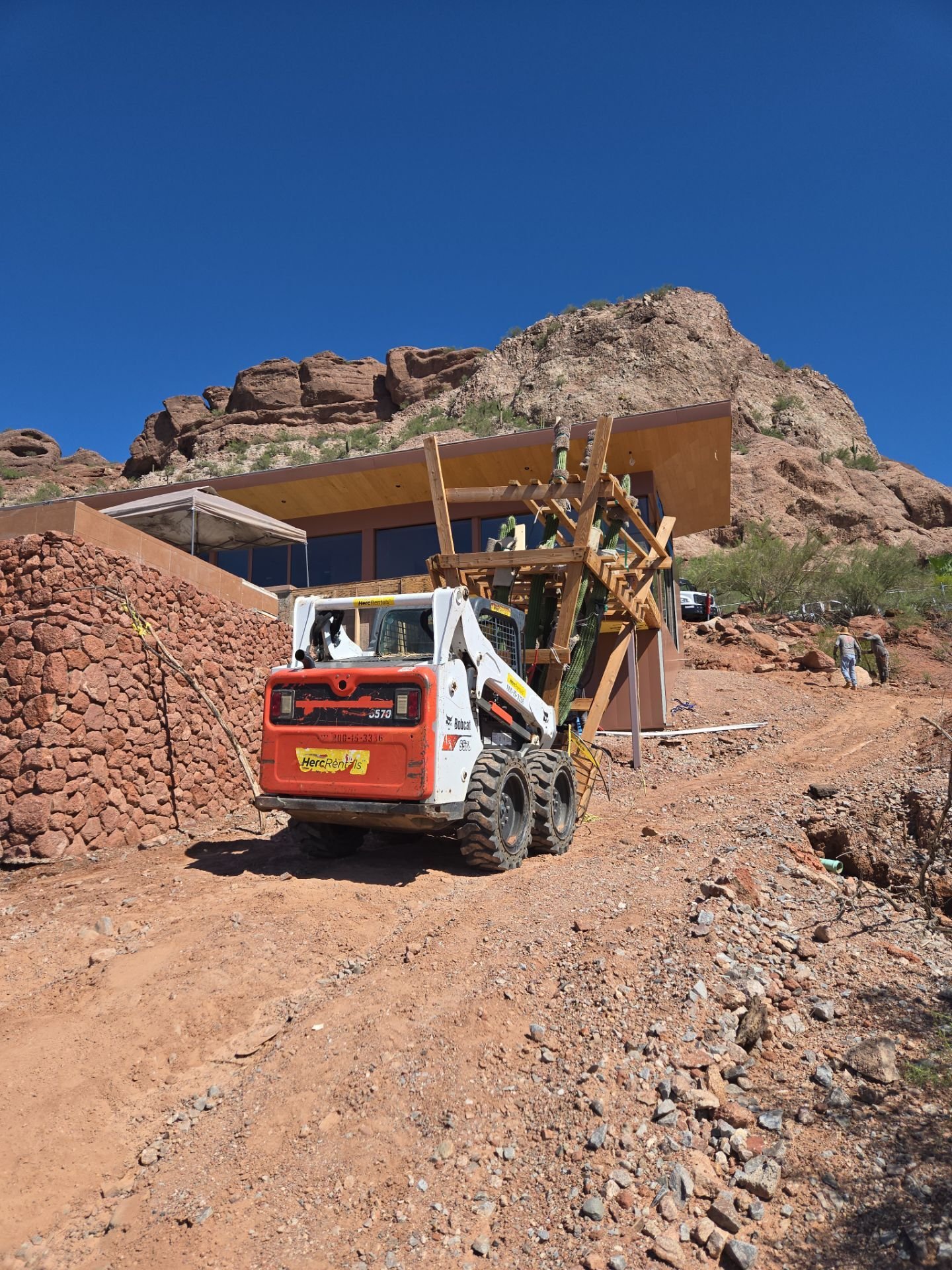
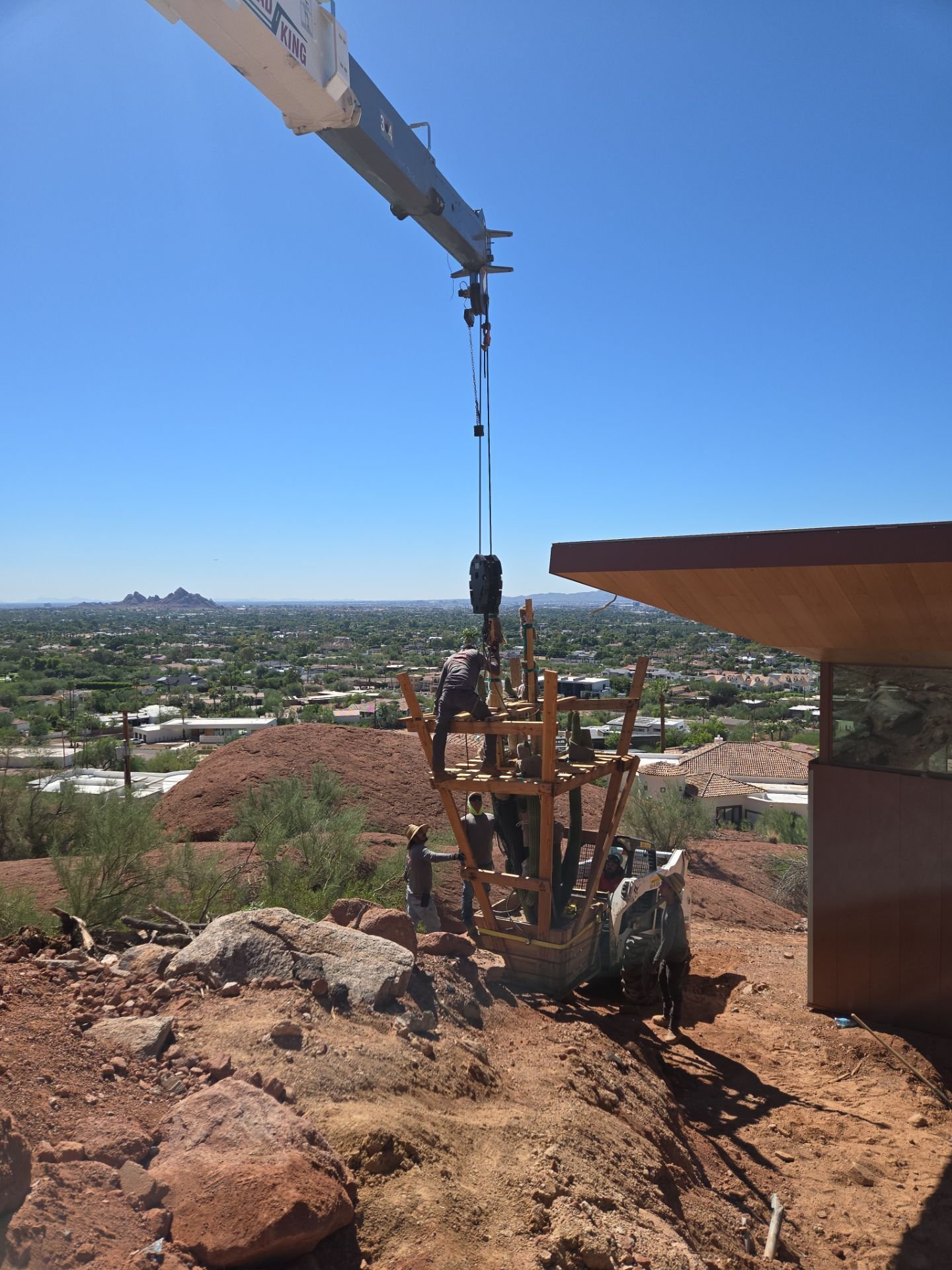
In the images above, you’ll notice a crane carefully lowering materials onto the site. This isn’t just for show—it’s a necessity.
During the first phase of this install, the crane was used to lift:
Large specimen cactus, securely crated and wrapped for protection
Massive boulders selected for retaining walls and sculptural accents
A compact bulldozer, required to shape terrain in areas inaccessible by truck
Each lift is choreographed. Crews on the ground guide the load by hand while operators maintain steady control overhead. This level of coordination ensures safety, precision placement, and zero damage to the home or surrounding landscape.
Handling Specimen Cactus with Care
One of the defining elements of a luxury desert landscape is mature cactus. These aren’t small nursery plants—they’re living sculptures that can weigh thousands of pounds.
From the photos, you can see:
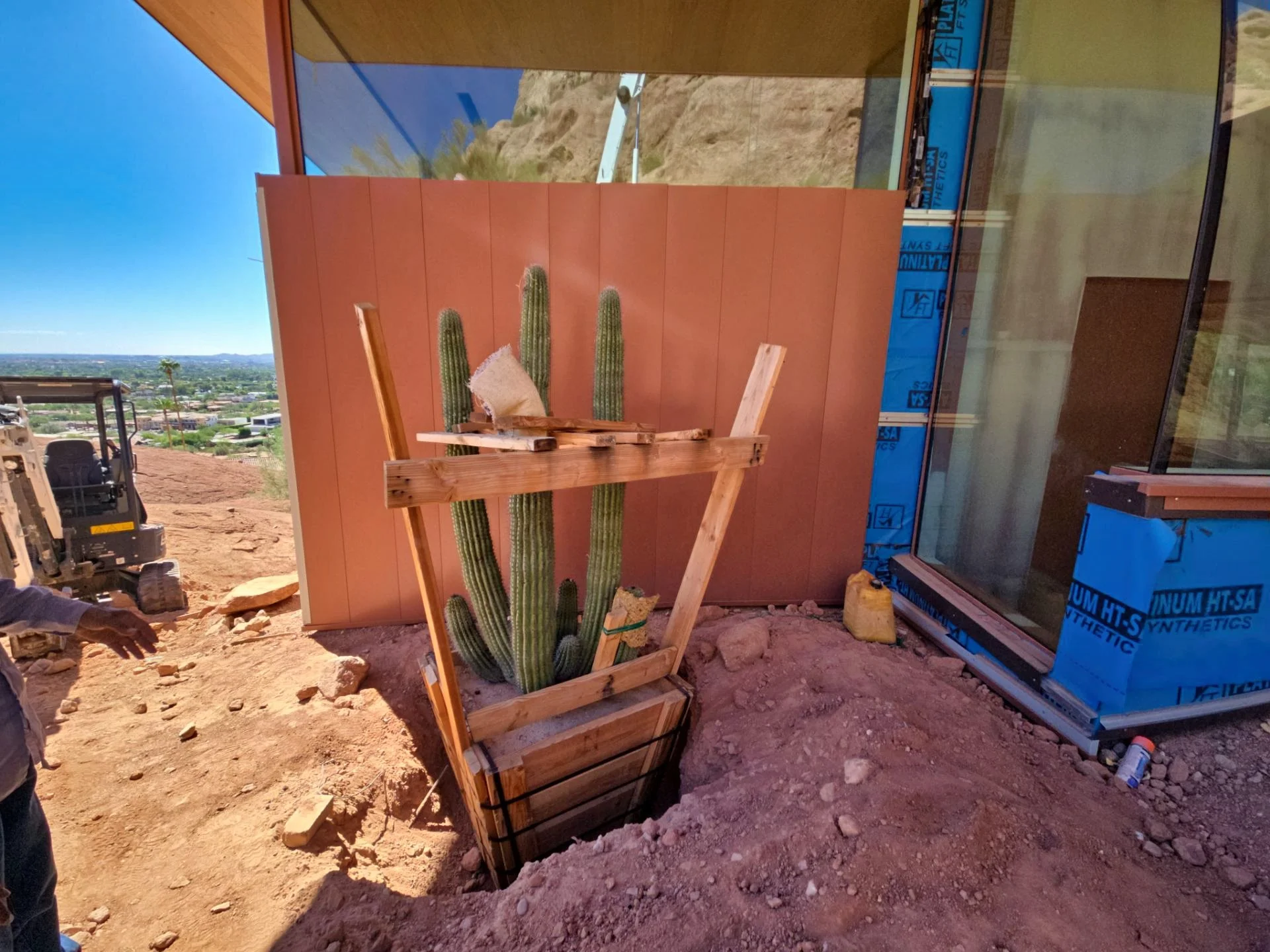
Custom wooden bracing built around each cactus
Padding and straps to protect ribs and spines
Precise vertical placement to preserve root orientation
Once lowered, each cactus is set by hand, aligned carefully with architectural sightlines, and temporarily supported until final planting and grading are complete.
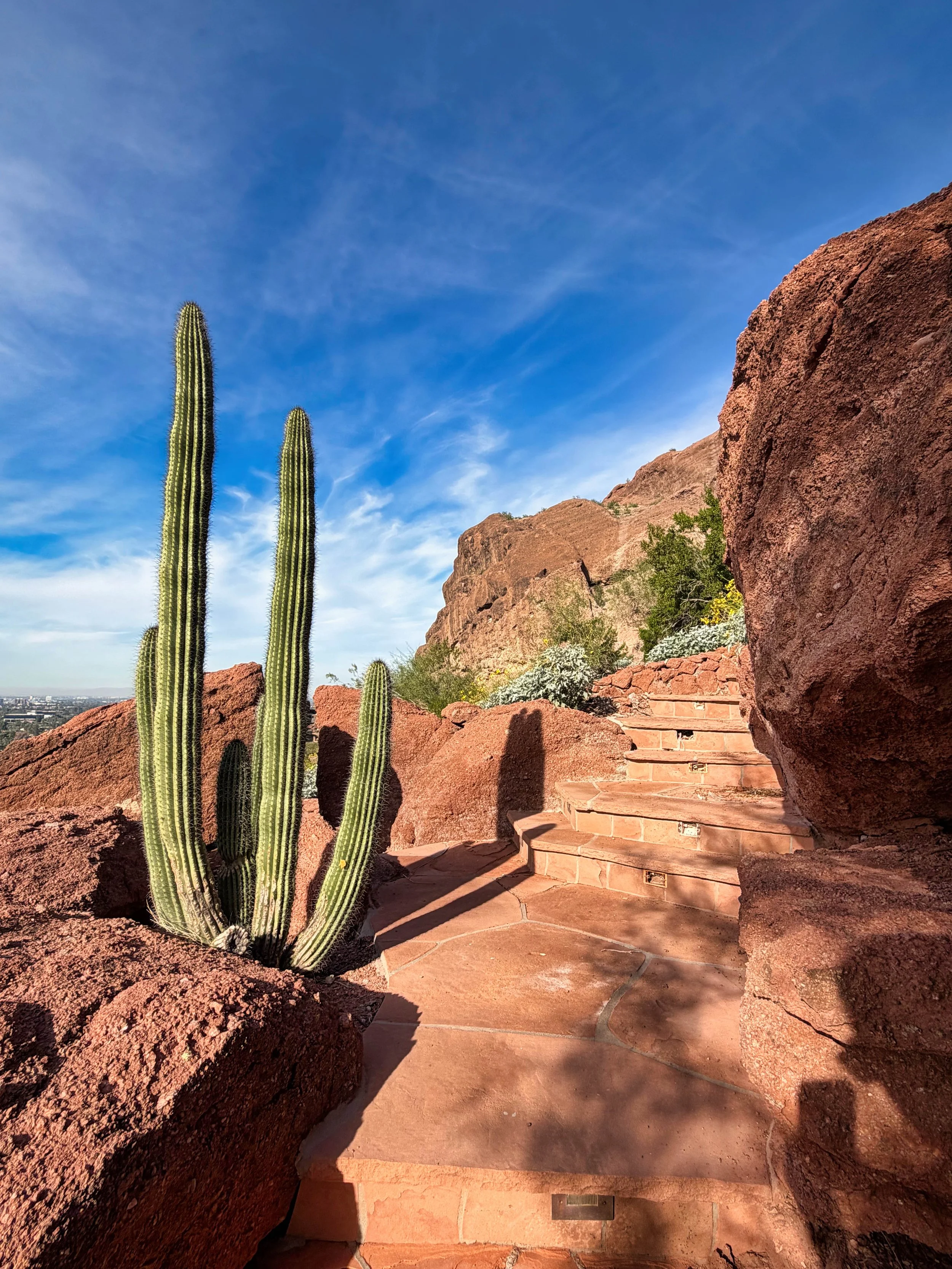
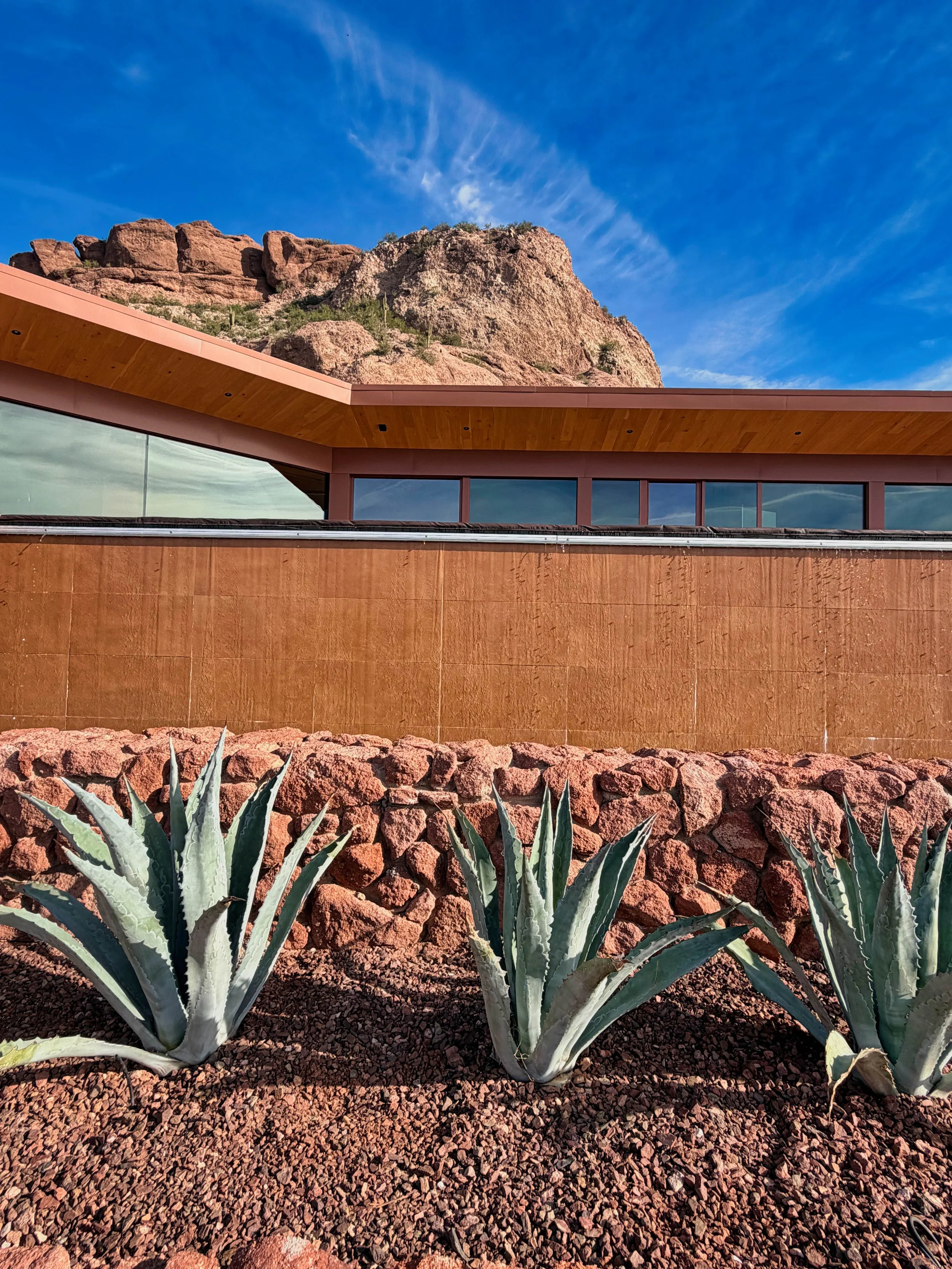
Designed for the Desert, Built for the Site
Projects like this highlight what truly defines custom high desert landscape design: adapting the plan to the land—not forcing the land to adapt to the plan.
From crane lifts and hillside access strategies to specimen cactus handling and stonework integration, these first stages are where vision meets execution.
Stay tuned as this landscape continues to evolve—from raw terrain to a fully realized desert retreat that feels timeless, grounded, and uniquely its own.
